US State EPR Programs Compared: Fees, Deadlines, and Reporting Rules Side by Side
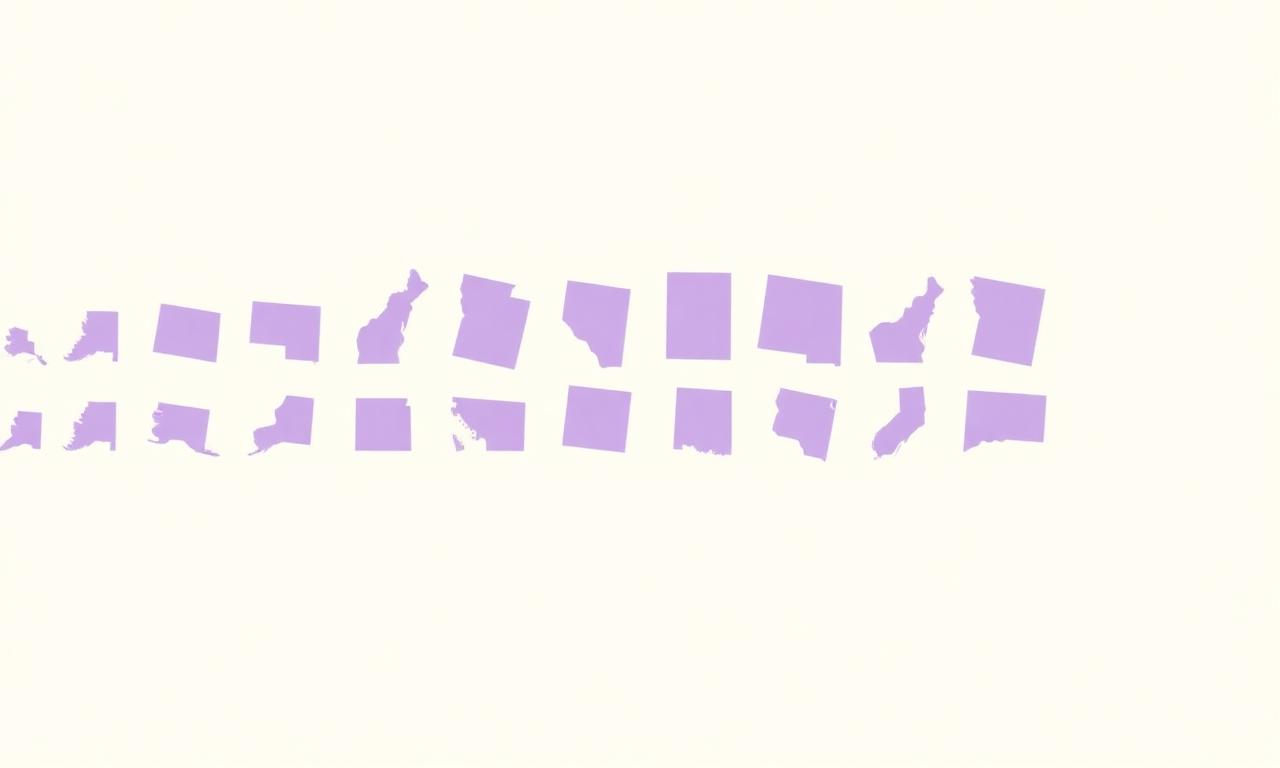
A side-by-side comparison of the seven US states with packaging EPR laws across fees, deadlines, covered materials, PROs, and reporting rules. All seven now have confirmed registration deadlines at different stages of maturity.
By Kevin Kai Wong, Managing Partner at gCurv Technologies
May 2, 202614 min read
Key takeaways
14 min read- Circular Action Alliance (CAA) is the approved Producer Responsibility Organization for California, Oregon, Colorado, Minnesota, Maryland, and Washington.
- Across all seven states, the producer is generally the brand owner, the entity whose name or trademark appears on the packaging.
- All seven programs cover packaging placed on the consumer market: rigid plastic, flexible plastic, paper and paperboard, metal, glass, and various composites.
- Every state uses a similar high-level formula: covered weight by material category, multiplied by a base rate, modulated by recyclability or recycled content factors.
- Each state sets its own annual reporting cadence, typically with one major submission window per cycle plus invoicing and reconciliation steps.
For a brand operating in more than one US state, the hardest part of EPR compliance is not any single state, it is reconciling the differences across all of them. Fees are calculated differently. Deadlines fall on different dates. Covered material lists do not match. Reporting schemas diverge.
This post puts the seven US states with packaging EPR laws side by side across the dimensions producers actually need to manage: who runs the program, who counts as a producer, what materials are covered, how fees are calculated, when reports are due, and what penalties apply. All seven now have confirmed registration and initial reporting deadlines, at different stages of program maturity. All specific dates and dollar figures should be confirmed against the relevant agency or PRO before planning is locked.
For an introductory map, see Seven US States with Packaging EPR in 2026.
Who runs each program
Circular Action Alliance (CAA) is the approved Producer Responsibility Organization for California, Oregon, Colorado, Minnesota, Maryland, and Washington. CAA has served as Maryland's PRO since October 2023, initially under precursor legislation and reaffirmed under SB 901. Maine operates through a state-administered stewardship structure that is distinct in form but conceptually similar in obligation.
This consolidation matters operationally for the six CAA states. Producers already enrolled with CAA for one of those states will typically extend that enrollment rather than create a fresh PRO relationship for each subsequent state.
> Note: program maturity varies. Oregon, Colorado, Maine, Minnesota, and Maryland have passed their initial registration and reporting deadlines, Washington's producer registration deadline of July 1, 2026 has passed, and California's program is expected to start on or before January 1, 2027 following finalization of its implementing regulations on May 1, 2026.
Who counts as a producer
Across all seven states, the producer is generally the brand owner, the entity whose name or trademark appears on the packaging. Importers and private-label retailers may also qualify. The specific definition varies, and the differences matter most for:
- Companies that sell under multiple brand names.
- Importers of foreign-brand goods.
- Private-label retailers and marketplace sellers.
- Franchise operations and licensees.
The legal entity that registers in each state should be confirmed against the statute and PRO bylaws, since misregistration creates audit risk.
What materials are covered
All seven programs cover packaging placed on the consumer market: rigid plastic, flexible plastic, paper and paperboard, metal, glass, and various composites. State-by-state differences appear in the treatment of:
- Service ware and food-contact items.
- Industrial and transport packaging.
- Beverage containers covered by deposit-return systems.
- Packaging used by exempt sectors (medical, infant formula, etc.).
A clean packaging dataset must therefore tag each SKU with state-specific inclusion and exemption flags.
How fees are calculated
Every state uses a similar high-level formula: covered weight by material category, multiplied by a base rate, modulated by recyclability or recycled content factors. The differences are in the specifics:
- The list of material categories.
- The base rate per category.
- The modulation rules (bonuses for recyclable formats, penalties for hard-to-recycle ones).
- Whether recycled content can reduce the base.
Maine adds a structural difference: it operates as a municipal reimbursement model rather than a fee-funded PRO program, which changes how the dollars flow but not what producers must report.
For mechanics, see Maine packaging EPR fee mechanics.
When reports are due
Each state sets its own annual reporting cadence, typically with one major submission window per cycle plus invoicing and reconciliation steps. Maryland's initial registration and simplified reporting were due May 31, 2026, and CAA submitted a full producer and brand list to MDE by July 1, 2026. Washington's producer registration deadline was July 1, 2026, with reporting cadence set by CAA and the Department of Ecology as the program rolls out. Producers should treat state deadlines as a portfolio of events rather than a single calendar event:
- Confirm the data submission window for each state every cycle.
- Plan internal data freezes well before the earliest confirmed state deadline.
- Build a single calendar that tracks all seven state cycles plus EU PPWR deadlines.
What penalties apply
Penalties for non-compliance vary by state but generally include monetary fines, market access restrictions, and public listing of non-compliant producers. The reputational dimension is increasingly material for B2B brands whose customers screen suppliers for compliance posture.
Reporting rules and data quality
Every PRO publishes a reporting schema with required fields, units, and validation rules. The differences across schemas are usually small in concept but large in detail: different category names, different unit conventions, different file formats. A producer running seven states from spreadsheets will spend most of its compliance budget on reformatting.
For the cost picture, see Multi-State EPR Cost Modeling: From $85K to $13M in Annual Exposure.
What to do in 2026
1. Build one canonical SKU-level packaging dataset with state-specific tags. 2. Maintain a master calendar of all seven state cycles, including the deadlines that have already passed and any late filings still open. 3. Map your dataset once to each PRO's schema and store the mappings as code, not as ad-hoc spreadsheet work. 4. Build per-state fee models so finance can see exposure side by side. 5. Establish an audit-readiness file for every claim (recyclability, recycled content, exemptions).
For Maryland and Washington specifically, producers who missed the 2026 registration deadlines should register with CAA immediately and prepare for annual reporting.
How Packgine helps
Packgine maintains the per-state schemas, fee tables, and modulation curves for all seven programs, so producers can see every state from one dataset, compare exposure side by side, and produce submission-ready packages for each PRO without rebuilding the data each cycle. For Maryland and Washington, Packgine supports late registration and annual reporting preparation.
Related reading
Compare your state-by-state exposure or book a working session.
Ready to automate your packaging compliance?
See how Packgine manages EPR, PPWR, and sustainability reporting from a single dashboard.
Related articles
State Compliance · California SB 54
California SB 54: Status After Nov 2025 Reporting
State Compliance · Oregon
Oregon EPR Costs by Company Size: Real Numbers from the First Invoicing Cycle
State Compliance · Colorado, Oregon
Colorado Producer Responsibility Program: Rules, Fees, and Registration Steps
State Compliance · California SB 54
California SB 54 Explained: The Packaging EPR Law Reshaping CPG in 2026
State Compliance · Maine
Maine EPR Fee Calculation: How Recyclability Drives Your Cost Tier
Compliance Strategy
Multi-State EPR Cost Modeling: From $85K to $13M in Annual Exposure