Seven US States with Packaging EPR: 2026 Map
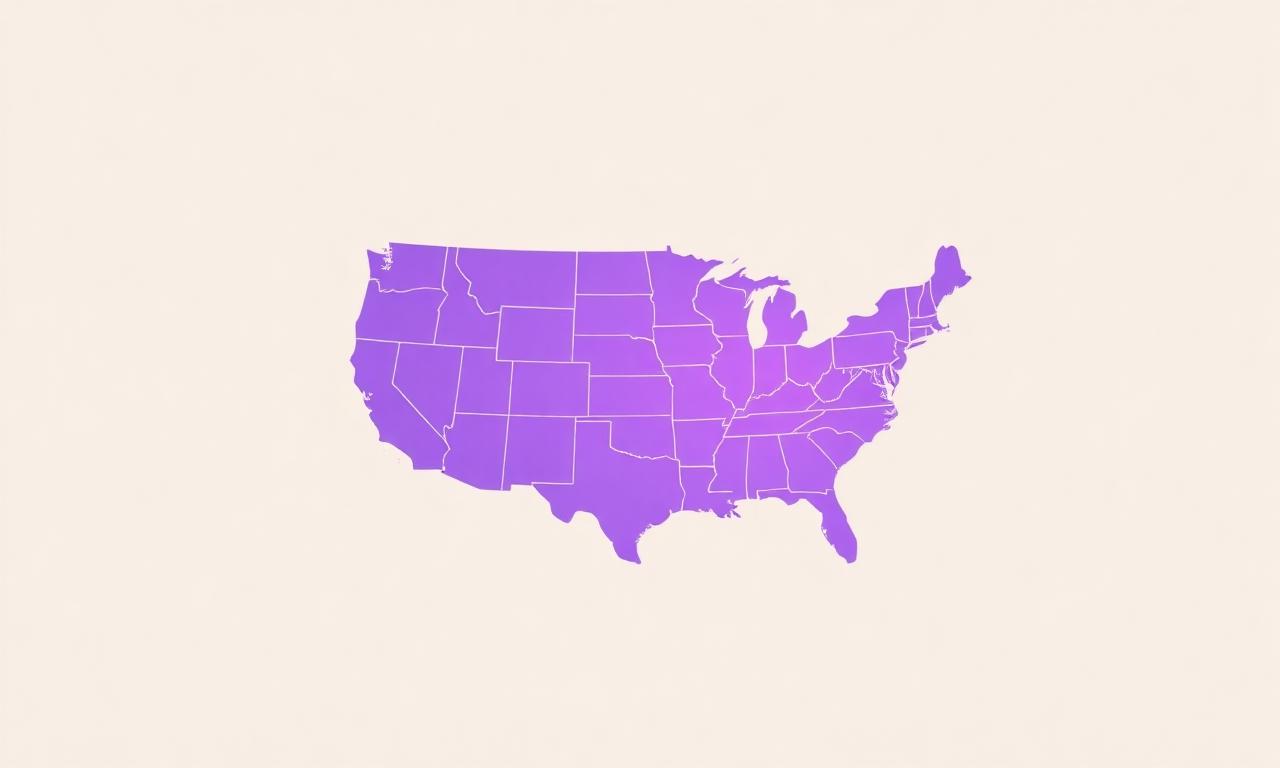
By 2026, seven US states have enacted packaging EPR laws, all with confirmed registration and initial reporting deadlines. Here is a status map of where each program actually stands.
By Kevin Kai Wong, Managing Partner at gCurv Technologies
May 2, 202613 min read
Key takeaways
13 min read- All seven enacted states now have confirmed registration and initial reporting deadlines, though they sit at different stages of program maturity.
- California's SB 54 is the largest US packaging EPR program by covered volume.
- Oregon was the first US state to bring a packaging EPR program live.
- Colorado's program, also administered by CAA, sets up a statewide recycling list and a fee model that funds expanded access.
- Maine's program is structurally distinct: it is a reimbursement model in which producers pay fees that reimburse municipalities for the cost of managing covered packaging waste.
Table of contents
- 1.The seven states at a glance
- 2.California (SB 54)
- 3.Oregon (Plastic Pollution and Recycling Modernization Act)
- 4.Colorado (Producer Responsibility Program for Statewide Recycling)
- 5.Maine (LD 1541)
- 6.Minnesota (Packaging Waste and Cost Reduction Act)
- 7.Maryland (SB 901)
- 8.Washington (Recycling Reform Act)
- 9.What to do in 2026
- 10.How Packgine helps
- 11.Related reading
By 2026, seven US states have enacted packaging Extended Producer Responsibility laws: California, Oregon, Colorado, Maine, Minnesota, Maryland, and Washington. All seven now have confirmed registration and initial reporting deadlines, but they sit at different stages of program maturity.
This post is a single-page status map. For each state, it summarizes what the law requires, who counts as a producer, who runs the program, and what the 2026 status is. Specific dates and dollar figures change cycle to cycle and should be confirmed against the relevant agency or PRO before any planning is locked.
For the deeper jurisdiction-by-jurisdiction view, see EPR Laws in the US: State Regulations 2026.
The seven states at a glance
All seven enacted states now have confirmed registration and initial reporting deadlines, though they sit at different stages of program maturity. Oregon, Colorado, Maine, Minnesota, and Maryland have already passed their initial producer registration and reporting deadlines. Washington's producer registration deadline (July 1, 2026) has also passed. California is further along in its regulatory process: SB 54's implementing regulations were finalized May 1, 2026, and its Producer Responsibility Organization plan is now under advisory board review ahead of an expected program start on or before January 1, 2027. Each state has its own statute, its own definitions, and its own timeline, but the operational shape is broadly shared: a Producer Responsibility Organization administers the program, producers register and submit packaging data, and fees fund collection and recycling infrastructure. No state completes its full fee and plan cycle before 2028.
California (SB 54)
California's SB 54 is the largest US packaging EPR program by covered volume. The Circular Action Alliance is the approved PRO. Covered producers register, submit packaging data, and pay fees that fund the statewide plan. Material reduction, recyclability, and recycled content targets escalate over the life of the program.
For a focused walkthrough, see California SB 54: A Practical Guide for Producers.
Oregon (Plastic Pollution and Recycling Modernization Act)
Oregon was the first US state to bring a packaging EPR program live. CAA administers Oregon as well. The Oregon program emphasizes a defined list of covered materials, a fee schedule that varies by material, and integration with the existing Oregon recycling system.
Colorado (Producer Responsibility Program for Statewide Recycling)
Colorado's program, also administered by CAA, sets up a statewide recycling list and a fee model that funds expanded access. Producers register, report, and pay fees on covered packaging and paper products.
For Maine, Oregon, and Colorado side by side, see Maine, Oregon & Colorado EPR Compared.
Maine (LD 1541)
Maine's program is structurally distinct: it is a reimbursement model in which producers pay fees that reimburse municipalities for the cost of managing covered packaging waste. Maine is administered through a stewardship organization on a similar timeline to the other early states.
For mechanics, see Maine packaging EPR fee mechanics.
Minnesota (Packaging Waste and Cost Reduction Act)
Minnesota's program brings packaging EPR to the Upper Midwest with CAA as the named PRO. Producers should expect a familiar registration and reporting cadence, with state-specific covered material lists and fee modulation.
Maryland (SB 901)
Maryland's SB 901 program became effective May 25, 2026, with Circular Action Alliance as the confirmed PRO since October 2023. Producers were required to register with CAA and provide simplified reporting by May 31, 2026, and CAA submitted a full producer and brand list to MDE by July 1, 2026. Both deadlines have passed, putting Maryland at a similar level of near-term maturity to Colorado and Minnesota. Producers who missed the deadline should register with CAA immediately to limit further exposure. Fee collection is expected to begin ahead of formal reimbursement starting July 1, 2028, when Maryland's Producer Responsibility Plan is also due to MDE. See Maryland EPR (SB 901): What to Do After the May 31 Deadline.
Washington (Recycling Reform Act)
Washington's Recycling Reform Act set a producer registration deadline of July 1, 2026, which has now passed, with CAA as the PRO administering registration. Reporting, fee schedules, and program plan milestones phase in from there. See Washington packaging EPR implementation roadmap.
What to do in 2026
For multi-state producers, the operational priorities are:
1. Confirm producer status in each state and identify the registering legal entity. 2. Establish PRO membership where required, typically with Circular Action Alliance, which is the confirmed PRO for California, Oregon, Colorado, Minnesota, Maryland, and Washington. Maine operates through a state-administered stewardship structure. 3. Build one SKU-level packaging dataset that can feed all seven state submissions. 4. Validate material categories and recyclability classifications against each PRO's schema. 5. Build state-by-state fee models so finance can budget current and future cycles. 6. Stand up audit-ready documentation for recycled content and recyclability claims.
For Maryland specifically, producers who missed the May 31, 2026 registration and simplified reporting deadline should register with CAA immediately and prepare for annual reporting.
For a financial picture, see Multi-State EPR Cost Modeling: From $85K to $13M in Annual Exposure.
How Packgine helps
Packgine treats the seven states as one dataset, seven outputs. The same SKU-level packaging record drives California, Oregon, Colorado, Maine, Minnesota, Maryland, and Washington fee models, registration packages, and data submissions. For Maryland, Packgine supports late registration after the May 31, 2026 deadline and prepares producers for annual reporting. Producers invest once in clean packaging data and reuse that investment for every state cycle.
Related reading
Ready to automate your packaging compliance?
See how Packgine manages EPR, PPWR, and sustainability reporting from a single dashboard.
Related articles
State Compliance · Maryland
Maryland EPR (SB 901): What to Do After the May 31 Deadline
State Compliance · New York
New York Packaging Reduction and Recycling Act: What Producers Need to Prepare
State Compliance · New Jersey
New Jersey Packaging EPR Explained: Scope, Timeline, and Producer Obligations
State Compliance
US State EPR Programs Compared: Fees, Deadlines, and Reporting Rules Side by Side
State Compliance · California SB 54
California SB 54: Status After Nov 2025 Reporting
State Compliance · Oregon
Oregon's Recycling Modernization Act: A Plain English Compliance Guide