EPR: Spreadsheets vs. Software Compared
Most packaging compliance teams still rely on spreadsheets. Here is the real cost of manual tracking versus automated platforms, and why the gap is widening.
By Kevin Kai Wong, Managing Partner at gCurv Technologies
March 27, 20268 min read
Key takeaways
8 min read- For most mid-size CPG brands, EPR compliance is managed by a sustainability manager, a regulatory affairs specialist, or sometimes a finance team member who inherited the responsibility.
- The most fundamental limitation of spreadsheet-based compliance is that it does not scale.
- Automated EPR compliance platforms address the scaling problem by centralizing packaging data, automating calculations, and generating jurisdiction-specific outputs from a single dataset.
- Here is a realistic comparison for a mid-size brand managing compliance across five US states.
- For a brand currently spending $120,000 annually on manual compliance (a mid-range estimate for five-state coverage), switching to an automated platform at $18,000 per year produces...
If you manage packaging compliance for a consumer brand, there is a good chance your current system involves at least one large spreadsheet. Probably several. You may have one for packaging material specifications, another for state-by-state EPR registration status, a third for fee calculations, and a fourth tracking reporting deadlines. If you are managing compliance across multiple US states and EU markets, that spreadsheet count climbs further.
This is not unusual. Spreadsheets have been the default tool for EPR compliance since the first state laws took effect. They are familiar, flexible, and free. But as the regulatory landscape has expanded from two or three states to seven active programs, with more on the way, the limitations of manual tracking have become harder to ignore.
This article compares the real costs of spreadsheet-based compliance against automated compliance software, covering time investment, error rates, penalty exposure, and the scaling problem that makes manual approaches increasingly untenable.
The Current State of Manual EPR Compliance
For most mid-size CPG brands, EPR compliance is managed by a sustainability manager, a regulatory affairs specialist, or sometimes a finance team member who inherited the responsibility. The workflow typically follows this pattern: gather packaging data from suppliers and internal systems, organize it into jurisdiction-specific formats, calculate fees based on current rate schedules, generate reports that meet each state's or PRO's submission requirements, track deadlines across all obligated jurisdictions, and maintain documentation for potential audits.
Each of these steps requires significant manual effort. Packaging data often comes from multiple sources, including supplier spec sheets, product engineering databases, procurement records, and sometimes physical measurements of actual products. Consolidating this data into a clean, accurate dataset is the foundational challenge.
Once the data is organized, the compliance team must apply jurisdiction-specific rules to generate reports. California's SB 54 has different reporting requirements than Oregon's SB 582 or Colorado's HB22-1355. Material categories may be defined differently. Fee schedules use different calculation methodologies. Submission formats vary. Each jurisdiction essentially requires its own workflow.
The Hidden Costs of Manual Tracking
Time Investment
Industry surveys and our conversations with compliance teams consistently point to 40 or more hours per month for multi-state EPR compliance using manual methods. For brands obligated in five or more states, that figure often exceeds 60 hours monthly during peak reporting periods.
This time breaks down roughly as follows: 15 to 20 hours on data collection and validation, 8 to 12 hours on fee calculations, 10 to 15 hours on report preparation and formatting, and 5 to 10 hours on deadline tracking, correspondence with PROs, and documentation maintenance.
At a fully loaded cost of $75 to $120 per hour for a compliance professional, that translates to $3,000 to $7,200 per month in labor costs alone, or $36,000 to $86,400 annually. And this assumes a single person can handle the workload without external consultants.
Error Rates
Manual data entry and calculation have well-documented error rates. Studies across industries consistently show that spreadsheet-based processes produce error rates of 15 to 20 percent. In the context of EPR compliance, errors typically appear in several areas.
Material weight calculations may use outdated specifications or fail to account for packaging components like labels, caps, or adhesives. Fee calculations may apply incorrect rate schedules, especially when eco-modulation factors change mid-year. Jurisdiction assignments may miss products that are sold in newly obligated states. And unit conversions between metric and imperial measurements, which are common when managing both US and EU compliance, introduce rounding errors that compound across large product portfolios.
A 15 percent error rate on packaging data that feeds into fee calculations can result in significant overpayment or underpayment. Overpayment wastes money directly. Underpayment creates audit liability and potential penalties.
Penalty Exposure
The financial penalties for EPR non-compliance are substantial. California's SB 54 allows fines of up to $50,000 per day per violation. Oregon's penalties reach $25,000 per day. Colorado's fines start at $5,000 for the first day and $1,500 per day thereafter. Even a single missed deadline or incorrect filing can trigger thousands of dollars in penalties.
Manual tracking systems are inherently vulnerable to missed deadlines because they depend on human memory and calendar management. When a compliance manager is sick, on vacation, or simply overwhelmed during a period when multiple states have overlapping deadlines, the risk of a missed filing increases dramatically.
Consultant Dependencies
Many brands supplement their internal compliance efforts with external consultants or law firms. EPR compliance consulting typically costs $200 to $500 per hour, and a multi-state compliance engagement can easily reach $50,000 to $150,000 annually. This cost is on top of internal staff time, not a replacement for it.
The Scaling Problem
The most fundamental limitation of spreadsheet-based compliance is that it does not scale. Each new state that enacts an EPR law effectively doubles the compliance workload for the team managing it. A brand that was managing two states in 2023 may now be managing five or six, with several more coming online in 2026 and 2027.
Manual processes scale linearly with jurisdiction count. Two states require twice the spreadsheets, twice the fee calculations, twice the report formatting, and twice the deadline tracking of one state. For brands operating nationally, the trajectory is unsustainable.
The EU adds another dimension. Brands that export to Europe must also manage PPWR compliance across 27 member states, each with its own EPR scheme that is being harmonized under the new regulation. Adding EU compliance to an already-strained manual US process typically requires either dedicated headcount or significant consulting spend. For a full breakdown of PPWR requirements, see our EU PPWR 2026 guide.
The Software Alternative
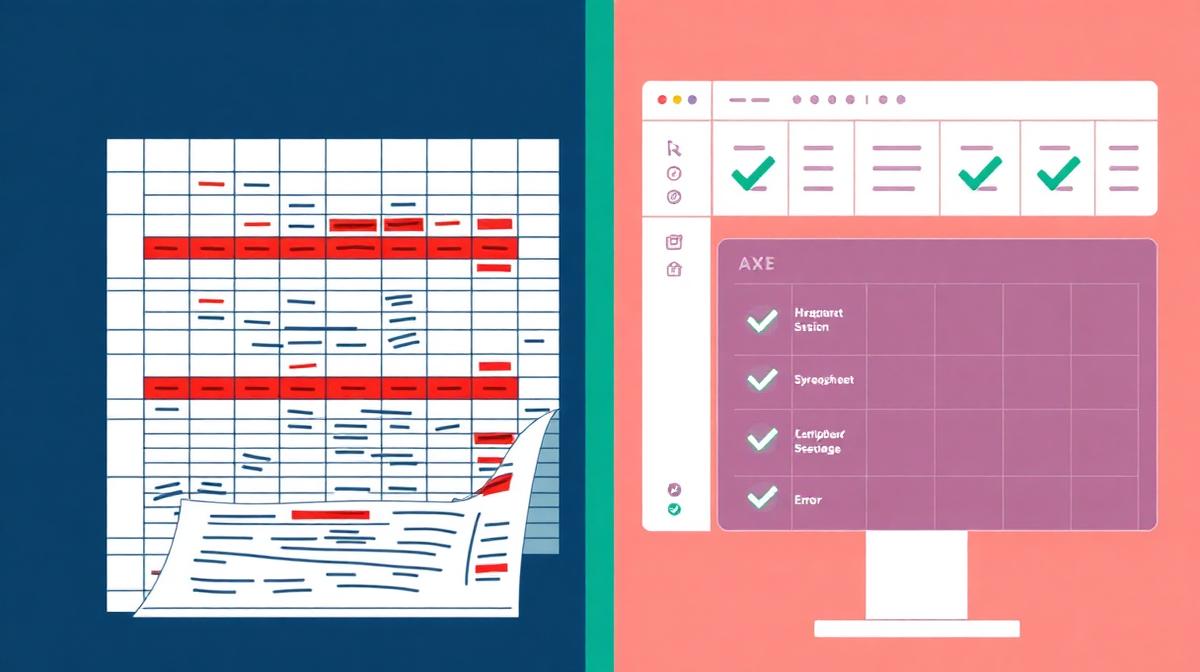
Automated EPR compliance platforms address the scaling problem by centralizing packaging data, automating calculations, and generating jurisdiction-specific outputs from a single dataset. The core capabilities include automated fee calculation using current rate schedules with eco-modulation factors applied automatically, deadline monitoring with proactive alerts weeks before filings are due, pre-formatted reports that meet each jurisdiction's submission requirements without manual reformatting, centralized packaging data management with version control and audit trails, and scenario planning to model the impact of packaging changes on fees and compliance status.
The key difference is that automated platforms absorb new jurisdictions with minimal incremental work. When a new state enacts an EPR law, the platform adds it to its coverage. The compliance team does not need to build new spreadsheets, research new fee schedules, or learn new reporting formats.
Cost Comparison
Here is a realistic comparison for a mid-size brand managing compliance across five US states.
Manual approach annual costs: staff time at 50 hours per month ($45,000 to $72,000), external consultants ($30,000 to $75,000), penalty risk reserve ($10,000 to $50,000), and opportunity cost of compliance staff not working on sustainability strategy. Total estimated annual cost: $85,000 to $197,000.
Automated platform annual costs: platform subscription ($4,800 to $18,000), staff time at 10 to 15 hours per month ($9,000 to $21,600), reduced penalty risk due to automated deadline tracking, and audit-ready documentation maintained automatically. Total estimated annual cost: $13,800 to $39,600.
The cost differential typically ranges from 60 to 80 percent savings for brands managing five or more state programs. The savings increase as more jurisdictions come online because the automated approach does not scale linearly with jurisdiction count.
Packgine offers Starter, Growth, and Enterprise tiers, with pricing scoped to SKU count, jurisdictions, and integration requirements. See our pricing page for current details.
ROI Analysis
For a brand currently spending $120,000 annually on manual compliance (a mid-range estimate for five-state coverage), switching to an automated platform at $18,000 per year produces first-year savings of approximately $102,000. The ROI improves in subsequent years as additional states enact EPR laws and the manual cost baseline would have increased while the platform cost remains relatively stable.
Beyond direct cost savings, automated compliance reduces several categories of risk. Penalty avoidance through automated deadline tracking protects against fines that can reach tens of thousands of dollars per incident. Audit readiness through maintained documentation reduces the cost and disruption of regulatory audits. And data accuracy improvements reduce the risk of fee miscalculations that can result in overpayment or underpayment disputes.
Making the Transition
The transition from spreadsheets to an automated platform does not have to be disruptive. Most platforms, including Packgine, accept packaging data in common formats like CSV and Excel, allowing teams to upload existing datasets rather than rebuilding from scratch. Typical onboarding takes 10 to 20 business days from subscription activation to first live compliance submission.
The most important first step is auditing the quality of your existing packaging data. Clean, accurate material specifications are the foundation of any compliance system, whether manual or automated. If your current spreadsheets have data quality issues, those need to be addressed as part of the migration, not carried forward.
For more on how Packgine handles multi-state EPR compliance, visit our EPR compliance page or explore our FAQ for answers to common questions. If you want to discuss your specific compliance situation, contact our team.
Conclusion
Spreadsheets served packaging compliance teams well when EPR was limited to one or two jurisdictions. That era is over. With seven active US state programs, several more in the pipeline, and the EU's PPWR raising the bar internationally, the complexity and volume of compliance obligations have outgrown what manual processes can reliably handle.
The question for compliance teams is not whether to move to automated tools, but when. The brands that make the transition now, while the regulatory landscape is still expanding, will build institutional capability and data infrastructure that compounds in value over time. Those that wait will face the same transition under greater time pressure and higher stakes.
The math is straightforward. The risk calculus favors action. And the tools are available today.
Ready to automate your packaging compliance?
See how Packgine manages EPR, PPWR, and sustainability reporting from a single dashboard.
Related articles
Compliance Strategy
EPR Fee Forecasting: How to Build a Number Finance Can Defend
EPR Compliance · California SB 54
The Two Grams Nobody Reported: Packaging Change Control for EPR
Compliance Guide
Do EPR Fees Get Passed On to Consumers?
Compliance Guide
Private Label & Store Brands: Who Files EPR?
Operations · United Kingdom, European Union
Building a Multi-Jurisdiction EPR Compliance Calendar: Every Deadline for 2026 to 2028
Industry Insights
AI-Powered Packaging Compliance in 2026