EU PPWR 2026: What Brands Must Know
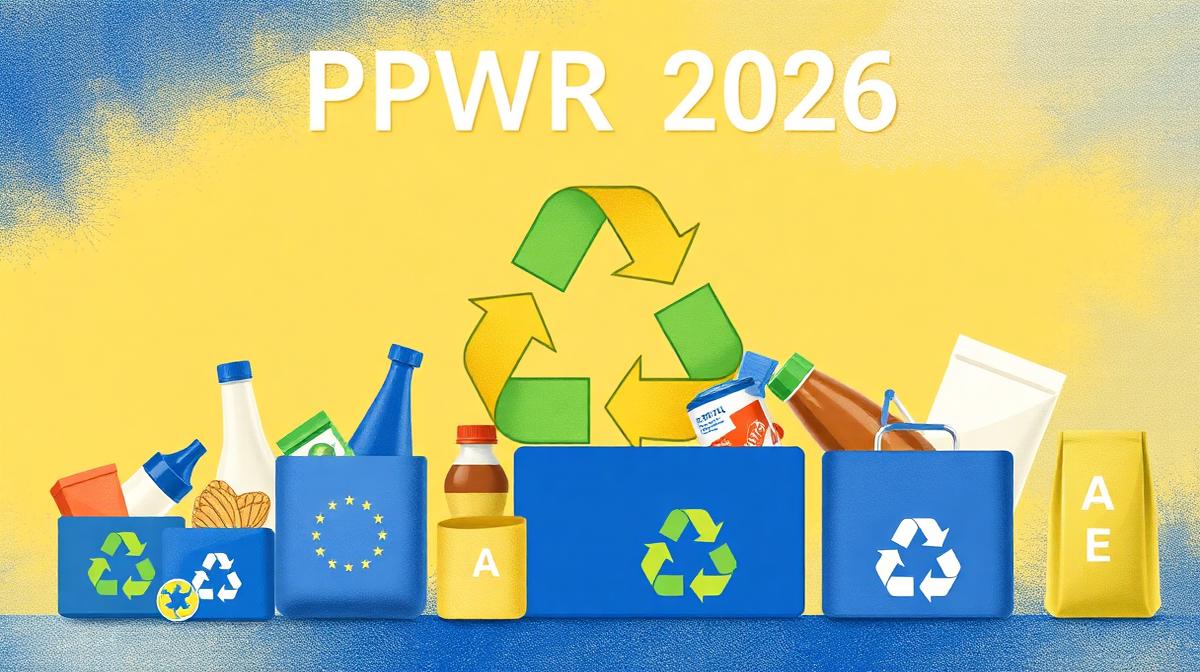
The EU PPWR applies from 12 August 2026 with binding requirements for recyclability, recycled content, empty space limits, and PFAS restrictions. Here is what brands need to prepare.
By Kevin Kai Wong, Managing Partner at gCurv Technologies
March 29, 202614 min read
Key takeaways
14 min read- The PPWR was formally adopted by the European Parliament and Council in late 2024 after several years of legislative development.
- For American brands that sell products in EU markets, the PPWR creates compliance obligations that layer on top of domestic EPR requirements.
- The PPWR represents a significant escalation from the previous Packaging and Packaging Waste Directive in several key ways.
- With the August 2026 application date approaching, brands should prioritize several actions.
- Managing PPWR compliance across a large packaging portfolio requires ongoing data management, regulatory monitoring, and scenario analysis.
The European Union's Packaging and Packaging Waste Regulation, known as the PPWR, represents the most significant overhaul of EU packaging law in three decades. It replaces the existing Packaging and Packaging Waste Directive (94/62/EC) with a directly applicable regulation that creates binding, harmonized requirements across all 27 EU member states.
The PPWR entered into force on February 11, 2025. Its core provisions begin applying on August 12, 2026. For any company that places packaged goods on the EU market, whether based in Europe or exporting from the United States, the compliance clock is running.
This guide covers the key requirements, the implementation timeline, the practical implications for packaging teams, and the steps brands should take before the August deadline.
PPWR Overview and Legislative Context
The PPWR was formally adopted by the European Parliament and Council in late 2024 after several years of legislative development. It is a regulation, not a directive, which is an important legal distinction. Unlike a directive, which must be transposed into national law by each member state (allowing for variation), a regulation applies directly and uniformly across the entire EU. This means the PPWR creates a single set of rules for all 27 countries, replacing the patchwork of national implementations that existed under the previous directive.
The stated objectives of the PPWR are to reduce packaging waste, increase recycling rates, promote circular economy principles for packaging, and create a level playing field across the single market. The regulation introduces requirements across several dimensions: packaging design, material composition, labeling, reuse, and extended producer responsibility.
For brands, the practical effect is a more demanding compliance environment, but also a more predictable one. Instead of navigating 27 different national interpretations of packaging rules, companies will eventually work with a single harmonized framework.
Key Requirements and What They Mean
Recyclability by Design
One of the PPWR's most consequential provisions is the requirement that all packaging placed on the EU market must be designed for recycling. The regulation establishes a grading system from A (highest recyclability) to C (not recyclable), based on criteria set out under PPWR Annex II that assess whether packaging can be effectively collected, sorted, and reprocessed using existing infrastructure.
From 2030, packaging that scores Grade C, the failing tier under PPWR Article 6 and Annex II, will be graded out of the EU market. By 2038, the threshold rises further so that only the higher recyclability bands remain compliant. These grades are determined by the European Commission through delegated acts that specify the assessment criteria for each packaging material and format.
The practical implication is that packaging engineers and sustainability teams need to evaluate their entire portfolio against the recyclability grading criteria well before the deadlines. Packaging formats that rely on multi-material composites, certain adhesives, or non-standard material combinations may need to be redesigned.
Recycled Content Targets for Plastic Packaging
The PPWR sets binding minimum thresholds for post-consumer recycled (PCR) content in plastic packaging. These targets are phased in over time.
By 2030, Article 7 of Regulation (EU) 2025/40 requires 30% for contact-sensitive PET packaging (excluding single-use plastic beverage bottles), 10% for contact-sensitive packaging made from plastic other than PET, 30% for single-use plastic beverage bottles, and 35% for all other plastic packaging. By 2040, these targets increase to 50%, 25%, 65%, and 65% respectively. The 2030 date is 2030 or 3 years from the date of entry into force of the implementing act referred to in Article 7(8), whichever is the latest.
These targets apply to the plastic components of packaging that constitute 5% or more of the total packaging weight. Brands will need reliable supply chains for food-grade recycled plastic, particularly for the 2030 contact-sensitive targets that require both PCR content and compliance with food safety regulations.
Empty Space Ratio Limits
The PPWR introduces rules limiting the empty space in e-commerce and transport packaging. By 2030, packaging used for e-commerce and grouped packaging must not exceed a 50% void space ratio. This means the empty air space inside a package cannot be more than half of the total package volume.
This requirement targets a well-documented problem in e-commerce logistics: oversized boxes with excessive void fill. For brands that ship products in packaging significantly larger than the product itself, this will require changes to packaging design or the adoption of right-sizing technology.
PFAS Restrictions in Food Contact Packaging
From August 2026, the PPWR restricts the use of per- and polyfluoroalkyl substances (PFAS) in food contact packaging. PFAS have been widely used in packaging as grease-resistant and moisture-resistant coatings, particularly in paper and cardboard food packaging.
The restriction applies broadly to food contact applications and represents a significant material change for brands using PFAS-treated packaging for items like takeaway containers, bakery bags, and fast food wrappers. Companies must conduct conformity assessments and maintain technical documentation proving their packaging meets the substance restriction requirements.
Eco-Modulated EPR Fees
The PPWR harmonizes the criteria for eco-modulation of EPR fees across the EU. Under the current system, each member state sets its own eco-modulation rules, creating inconsistency for brands operating in multiple countries. The PPWR establishes common criteria based on packaging recyclability, recycled content, and other sustainability attributes.
The effect is that packaging with higher recyclability grades and more recycled content will pay lower EPR fees, while packaging that is harder to recycle will face premium rates. This creates a direct financial incentive for sustainable packaging design. For brands managing large packaging portfolios, the fee differential between high-performing and low-performing packaging formats could be substantial.
Packaging Waste Reduction Targets
The PPWR sets binding waste reduction targets against a 2018 baseline: 5% reduction by 2030, 10% by 2035, and 15% by 2040. These apply at the member state level but will influence producer obligations through EPR fee structures and potentially through restrictions on certain packaging formats.
The regulation also bans specific single-use packaging formats for certain applications starting in 2030, including small single-use plastic packaging for condiments, cosmetics, and toiletries in the HORECA (hotels, restaurants, catering) sector, and single-use packaging for fresh fruit and vegetables under 1.5 kg.
Labeling and Digital Product Passports
From 2028, packaging must carry harmonized labels covering material composition and sorting instructions. The information must be presented using a standardized format to help consumers sort packaging correctly. Compostable packaging must be clearly identified, and reusable packaging must carry appropriate indicators.
Looking further ahead, Digital Product Passports (DPP) for packaging are established by the ESPR, Regulation (EU) 2024/1781, Chapter III, Articles 9 to 11, rather than by the PPWR, and are expected from 2030 onward. These will require packaging to carry digital identifiers (QR codes or similar) linking to structured environmental data, including material composition, recyclability information, and recycled content percentages.
Impact on US Brands Exporting to the EU
For American brands that sell products in EU markets, the PPWR creates compliance obligations that layer on top of domestic EPR requirements. Any company that places packaged goods on the EU market, whether directly or through importers, must ensure that its packaging meets PPWR requirements.
The practical effect is that US brands exporting to Europe need to maintain two sets of compliance processes: one for US state-level EPR obligations and another for EU PPWR requirements. The material composition, recyclability, and labeling standards may differ between the two frameworks, meaning that packaging designed for the US market may not automatically comply with EU requirements.
This is particularly relevant for brands that use the same packaging across both markets. A packaging format that is compliant in California may not meet PPWR recyclability grades or recycled content targets. Brands with significant EU revenue should conduct a portfolio-wide assessment against PPWR criteria to identify gaps before the August 2026 application date.
For more on how US EPR laws compare with the PPWR, see our comprehensive EPR guide.
Comparison with the Previous Packaging Directive
The PPWR represents a significant escalation from the previous Packaging and Packaging Waste Directive in several key ways.
The directive set general objectives but allowed member states wide discretion in implementation. The PPWR creates directly applicable rules, reducing variation across countries. The directive focused primarily on recycling targets for packaging waste as a whole. The PPWR adds specific requirements for packaging design, material composition, and individual producer obligations. The directive did not address issues like empty space ratios, PFAS restrictions, or digital product passports. The PPWR introduces all of these as binding requirements.
For brands that have been complying with the directive through existing national EPR schemes, the PPWR raises the bar considerably. Compliance with current national rules does not automatically mean compliance with PPWR requirements.
What Companies Should Do Now
With the August 2026 application date approaching, brands should prioritize several actions.
First, conduct a full portfolio assessment against PPWR recyclability criteria. Map each packaging format to the A through C grading scale defined under PPWR Annex II to identify which products are at risk. Packaging scoring Grade C will need redesign or replacement before the 2030 market restriction takes effect.
Second, audit your recycled content supply chain. The 2030 PCR targets require reliable sourcing of food-grade and non-food-grade recycled plastic. Begin supplier conversations now if your current packaging does not meet the minimum thresholds.
Third, review your packaging for PFAS. Any food contact packaging using PFAS-treated materials must already be reformulated, since the restrictions apply from 12 August 2026. Work with your materials suppliers to identify compliant alternatives.
Fourth, prepare for harmonized labeling requirements. While the 2028 deadline provides some runway, building the data infrastructure to generate compliant labels requires planning, especially for brands with thousands of SKUs across multiple EU markets.
Fifth, model the financial impact of eco-modulated fees. Understanding how your packaging portfolio will perform under the new fee structure allows you to prioritize the packaging changes that deliver the greatest cost savings.
For answers to common PPWR questions, visit our FAQ page.
How Packgine Tracks PPWR Compliance
Managing PPWR compliance across a large packaging portfolio requires ongoing data management, regulatory monitoring, and scenario analysis. Packgine provides a centralized platform for tracking all PPWR obligations alongside US EPR requirements.
The platform scores each packaging SKU against PPWR recyclability grades, tracks recycled content percentages against the 2030 and 2040 targets, models the financial impact of eco-modulated fees under the harmonized criteria, generates compliant labeling templates, and sends proactive alerts as PPWR deadlines and delegated acts are published.
For brands managing both US and EU compliance obligations, having a single dashboard that covers both frameworks eliminates the operational complexity of maintaining parallel systems. Learn more about Packgine's capabilities on our capabilities page or contact our team to discuss your specific compliance needs.
Conclusion
The PPWR is the most significant packaging regulation to emerge from the EU in decades. Its directly applicable nature means there is no room for national interpretation or delay. Brands that sell packaged goods in Europe, whether based in the EU or exporting from the US, must have their compliance systems in place now that the regulation applies from 12 August 2026.
The regulation creates both challenges and opportunities. The recyclability and recycled content requirements demand packaging redesign and supply chain investment. But the eco-modulated fee structure also rewards brands that move early on sustainable packaging. Companies that treat PPWR compliance as a strategic initiative rather than a last-minute obligation will be better positioned to manage costs, maintain market access, and differentiate on sustainability.
The clock is running. August 2026 is a calendar item, not a forecast.
Ready to automate your packaging compliance?
See how Packgine manages EPR, PPWR, and sustainability reporting from a single dashboard.
Compliance overview
Related articles
PPWR Regulations · European Union
EU PPWR: What Packaging Companies Must Know
Scope & Edge Cases · European Union
Chemical Recycling and Mass Balance Accounting Under EPR and PPWR
EU Compliance · European Union
Germany's VerpackDG and LUCID Registry: A Producer's Compliance Guide
Operations · United Kingdom, European Union
One Recycled Content Evidence Record, Three Jurisdictions: A Cross-Jurisdiction Model
EU Compliance · European Union
PPWR Recyclability Grades: How A, B, and C Are Assigned and What They Mean
State Compliance · California SB 54
California SB 54 Explained: The Packaging EPR Law Reshaping CPG in 2026