Scope 3 Packaging Emissions: Supply Chain
For packaging companies, 60-80% of emissions come from the supply chain. Here's how to measure, report, and reduce Scope 3 carbon footprint.
By Kevin Kai Wong, Managing Partner at gCurv Technologies
January 12, 20266 min read
Key takeaways
6 min read- The GHG Protocol defines 15 categories of Scope 3 emissions.
- Packgine makes Scope 3 emissions measurement and reduction actionable for packaging companies of every size.
- For packaging companies and brands that use packaging, Scope 3 emissions, the indirect emissions occurring across the value chain, typically account for 60% to 80% of total greenhouse gas...
For packaging companies and brands that use packaging, Scope 3 emissions, the indirect emissions occurring across the value chain, typically account for 60% to 80% of total greenhouse gas emissions. Yet Scope 3 remains the most challenging category to measure, the hardest to reduce, and increasingly, the most scrutinized by regulators, investors, and customers.
Understanding Scope 3 for Packaging
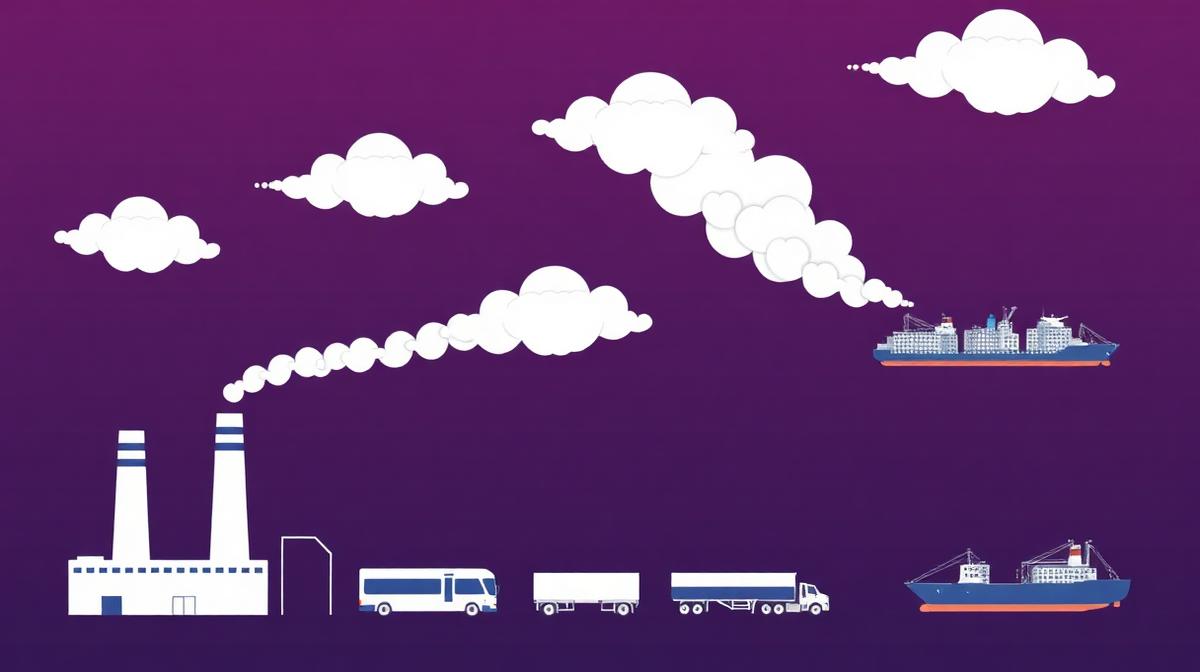
The GHG Protocol defines 15 categories of Scope 3 emissions. For packaging companies, the most material categories are:
Category 1: Purchased Goods and Services (typically 40 to 60% of Scope 3). This includes raw material production, the manufacturing of resins, paper pulp, aluminum ingots, glass batch, inks, adhesives, and coatings. For a typical plastic packaging manufacturer, resin production alone can account for 50% or more of total corporate emissions.
Category 4: Upstream Transportation (5 to 15% of Scope 3). Transportation of raw materials from suppliers to manufacturing facilities. The emissions depend on distance, mode of transport (ocean, rail, truck), and fuel type.
Category 9: Downstream Transportation (5 to 10% of Scope 3). Distribution of finished packaging to customers. For companies serving global markets, this can be significant.
Category 12: End-of-Life Treatment of Sold Products (5 to 15% of Scope 3). Emissions from the disposal of packaging after consumer use, including landfill methane, incineration emissions, and recycling process emissions. This category is unique in that recyclable packaging and packaging made from recycled content can significantly reduce end-of-life emissions.
Category 2: Capital Goods, and Category 3: Fuel and Energy-Related Activities contribute smaller but non-negligible shares of Scope 3 emissions.
Why Scope 3 Matters Now
Regulatory Drivers
The EU's Corporate Sustainability Reporting Directive (CSRD) requires companies to report material Scope 3 emissions starting in 2024 to 2026. The European Sustainability Reporting Standards (ESRS) E1 specifies detailed Scope 3 disclosure requirements including methodology, data sources, and reduction targets.
The SEC adopted climate-related disclosure rules in March 2024 that would have required US public companies to disclose Scope 3 emissions where material, but the rules were stayed in April 2024 before taking effect and were never codified in the Code of Federal Regulations. The Commission proposed rescinding them in full in May 2026, and that proposal is still pending. US public companies have no SEC Scope 3 obligation today, though CSRD and California's SB 253 reach many of the same filers.
California's Climate Corporate Data Accountability Act (SB 253), signed in 2023, requires companies with over $1 billion in annual revenue doing business in California to report Scope 1, 2, and 3 emissions starting in 2027. This affects virtually every major CPG company, retailer, and packaging supplier.
Customer Pressure
Major retailers and CPG companies are increasingly requiring their packaging suppliers to disclose and reduce Scope 3 emissions. Walmart's Project Gigaton asks suppliers to reduce emissions across six key areas. Unilever, Nestlé, and P&G have all set targets to halve their Scope 3 emissions by 2030. Amazon's Climate Pledge requires suppliers to demonstrate emissions reduction progress.
Packaging companies that cannot measure and demonstrate Scope 3 reduction risk losing major customer accounts.
Investor Scrutiny
ESG investors increasingly evaluate companies based on their Scope 3 performance. CDP (formerly Carbon Disclosure Project) reports that 70% of a company's environmental impact typically lies in Scope 3. Companies with poor Scope 3 disclosure receive lower ESG ratings, affecting access to capital and investor interest.
Measuring Scope 3 Emissions
Data Collection Challenges
The fundamental challenge of Scope 3 measurement is that the data comes from other organizations. For Category 1 (raw materials), you need emissions data from your material suppliers. For Category 4 (transportation), you need data from logistics providers. For Category 12 (end-of-life), you need data about waste management infrastructure in every market where your packaging is used.
Most companies begin with a spend-based approach, estimating emissions based on financial spending and industry-average emission factors. This provides a reasonable starting point but lacks the precision needed for meaningful reduction targets.
The gold standard is a supplier-specific approach, collecting primary emissions data from your actual suppliers. This requires significant supplier engagement but provides far more accurate results and identifies specific reduction opportunities.
Calculation Methodology
For each Scope 3 category, the basic calculation is: Activity Data × Emission Factor = Emissions (kg CO₂e).
For raw materials (Category 1), activity data is the weight of each material purchased, and emission factors come from lifecycle assessment databases (ecoinvent, GaBi) or supplier-specific data. Example: 1,000 tonnes of virgin PET purchased × 2.73 kg CO₂e/kg = 2,730 tonnes CO₂e.
For transportation (Categories 4 and 9), activity data includes tonne-kilometers by mode of transport. Example: 500 tonnes shipped 5,000 km by ocean freight × 0.008 kg CO₂e/tonne-km = 20 tonnes CO₂e.
For end-of-life (Category 12), calculations depend on the disposal scenario. Recycling typically has lower emissions than landfill or incineration, but the actual scenario depends on local infrastructure and consumer behavior.
Reduction Strategies
Material Selection (highest impact) Switching from virgin to recycled materials can reduce Category 1 emissions by 30 to 80% depending on the material. Recycled PET (rPET) has approximately 60% lower emissions than virgin PET. Recycled HDPE reduces emissions by approximately 50%. Recycled aluminum reduces emissions by approximately 95%. Recycled paperboard reduces emissions by approximately 30%.
Supplier Engagement Engaging with suppliers to reduce their operational emissions can significantly impact your Scope 3. Strategies include preferencing suppliers using renewable energy, collaborating with suppliers on process efficiency improvements, establishing long-term supply agreements conditional on emissions reduction targets, and joining industry initiatives like the Science Based Targets Network.
Design Optimization Packaging design decisions directly affect Scope 3 emissions. Lightweighting reduces material emissions proportionally. Mono-material designs improve recyclability, reducing end-of-life emissions. Local sourcing reduces transportation emissions. Concentrated product formulations reduce packaging volume and associated emissions.
Logistics Optimization Transportation emissions can be reduced through modal shift (ocean and rail vs. truck and air), route optimization, increased vehicle utilization, and low-carbon fuel adoption (electric vehicles, biofuels).
Cost Implications
Measurement Costs Initial Scope 3 assessment: $25,000, $100,000 (depending on supply chain complexity). Annual monitoring and reporting: $10,000, $50,000. Software platforms for automated calculation: $15,000, $75,000 per year.
Reduction Investment Costs Recycled content procurement premiums: 10 to 40% above virgin material costs (varies by material and market conditions). Supplier engagement programs: $20,000, $100,000 per year. Packaging redesign: $50,000, $500,000 (one-time, depending on portfolio size). Logistics optimization: $15,000, $75,000 for analysis and implementation.
Return on Investment Despite the costs, Scope 3 reduction typically delivers positive ROI through reduced EPR fees (materials with lower environmental impact often pay lower EPR fees), customer retention and growth (maintaining and winning business with sustainability-conscious customers), risk mitigation (avoiding future carbon pricing and regulatory costs), and operational efficiency (many reduction strategies also reduce material and logistics costs).
The companies that master Scope 3 measurement and reduction will be the sustainability leaders of the next decade, and the ones best positioned for a world where carbon costs are increasingly internalized.
How Packgine Helps
Packgine makes Scope 3 emissions measurement and reduction actionable for packaging companies of every size.
EPR & PPWR Compliance Automation: Packgine integrates Scope 3 emissions data with your EPR and PPWR compliance workflows. As carbon reporting requirements expand under CSRD and California's SB 253, Packgine ensures your emissions data flows seamlessly into required disclosures, no separate carbon accounting system needed.
Compliance Cost Estimating: Our platform models the total cost impact of Scope 3 reduction strategies, including material cost changes, EPR fee adjustments, and potential carbon pricing exposure. See which reduction investments deliver the best financial return alongside emissions cuts.
Alternative Product Suggestions: Packgine identifies packaging materials and suppliers that dramatically reduce Scope 3 emissions. Get recommendations for recycled content sources with verified lower carbon footprints, lighter-weight alternatives that cut both emissions and costs, and local suppliers that reduce transportation-related Scope 3 emissions, all with quantified impact projections.
Ready to automate your packaging compliance?
See how Packgine manages EPR, PPWR, and sustainability reporting from a single dashboard.
Related articles
Sustainability
Packaging Carbon Footprint: How to Calculate
Operations
In-House vs Outsourced Packaging Compliance
Carbon Footprint
Decarbonizing Packaging Supply Chains
Sustainability · European Union
PCR Content: Meeting Recycled Mandates
Sustainability
Circular Packaging: 40% Waste Cut by 2030
EPR Compliance · Colorado, Maine
Maine, Oregon & Colorado EPR Compared